
Employee Absence
and Presenteeism
Management
Why is Employee Absence Management so important?
There will always be instances where employees are absent through sickness, and most businesses will have policies in place to support staff and demonstrate compliance with statutory regulations. However, in some cases, employees can be regularly - even habitually - absent from work, often without clear reason..
Excessive employee absenteeism can be a challenging problem, adding unforeseen costs to the running of your business and having a detrimental effect on the morale of your workforce.

Helping you with effective absence management
At UKIM, we understand the difficulties that businesses face when dealing with employee absenteeism. That’s why we’ve developed a range of effective solutions that enable you to measure, monitor and manage staff absences, which will assist with;
- Identifying the root causes of persistent employee absences
- Addressing underlying health concerns or issues
- Staying ahead of challenges with your workforce capacity
- Implementing effective return-to-work programmes
Managing Presenteeism in the workplace.
In addition to our focus on effective Absence Management, we also recognise the importance of managing Employee Presenteeism, or the impact of staff who are present at work but are not functioning at their full capacity due to health issues. Our approach will help you safely keep an employee at work whilst ensuring they enjoy a rapid return to good health.
Our Employee Absence Management systems help you determine whether staff would benefit from additional support through a range of Occupational Health services, such as Physiotherapy or Counselling. Combined with our team of clinical experts, we will help you develop programmes and initiatives that address and reduce identified health issues. All of which - this independent medical evidence and advice can also be relied upon in a court of law if the need arises.
Our established processes will help you reduce absences and presenteeism and result in a healthier, more productive workforce.
Our process for reducing persistent Absence and Presenteeism:
- Early intervention
- Effective data management and tracking
- Addressing and reducing identified health issues
- Digital referrals to specialist rehabilitation services where required
- Safe and effective return to work strategies
- Improving employee work capacity

We recommend that you help your employees build strength and resilience using our biopsychosocial model - taking into account physical and mental health, current/ongoing medical conditions, and any relevant social factors.
This multidisciplinary approach includes access to specialist rehabilitation and independent medical advice that has been effective in helping employees recover and return to work as quickly and safely as possible.
Our Absence Management service are available on a contractual or on-demand basis.
Our Absence Management FAQ
-
Why Absence Management matters for your business
Research from CIPD shows that sickness absence costs UK businesses billions of pounds every year, with the average employee taking around 6–7 days off work annually.
Beyond the financial cost, unplanned absences disrupt team dynamics, reduce efficiency, and put extra pressure on colleagues. A structured absence management process helps employers identify patterns of absence, address potential underlying issues, and support employees in staying engaged and productive at work. -
The costs of Absenteeism
- Financial Impact: Absenteeism can increase costs for businesses and organisations. The direct costs of paying absent employees, temporary replacements, and overtime for other staff can accumulate quickly. Indirect costs, such as decreased productivity due to staff absences, can potentially impact customer satisfaction and add to the financial burden.
- Workplace Morale: Frequent absenteeism can put a strain on the team dynamics and create additional stress for those left to handle increased workloads. This can result in decreased morale and lower job satisfaction, negatively impacting the workplace culture.
- Productivity Loss: A workforce with high absenteeism rates is likely to experience disruptions in workflow, - also known as staff presenteeism, which can lead to delays in project timelines and overall productivity loss. Consistent absenteeism and presenteeism may hinder the organisation's ability to meet its strategic objectives.
-
Key elements of an effective Absence Management Policy
Every organisation benefits from having a clear absence management policy in place. While each workplace is different, effective policies usually include:
- Clear reporting procedures for employees who are unwell
- Guidance on when medical evidence is required
- Structured return-to-work interviews to support staff
- A process for recording and monitoring absence trends
- Support pathways for employees with long-term health issues
- Access to occupational health assessments and rehabilitation services
Preventive Health Measures
At UKIM, we offer practical solutions that focus on various preventive health measures that enable businesses to measure, monitor and manage staff absences.Regular health check-ups, screenings, and wellness programs can identify health issues early on, helping employees address concerns before they escalate and result in prolonged absences.
Mental Health Support
Our occupational health services play a pivotal role in addressing mental health concerns - a significant contributor to absenteeism. By implementing a robust OH strategy, we will be able to provide counselling services and stress management programs, which in turn will foster a supportive work environment, thus reducing the impact of mental health issues on absenteeism rates.Ergonomic Assessments
Many absences are due to musculoskeletal issues arising from poor workplace ergonomics. Occupational health providers like UKIM conduct ergonomic assessments to identify and address potential risks, promoting a safer and healthier work environment. -
Absence Management vs. Presenteeism: What’s the difference?
While absence management focuses on reducing avoidable employee absences, presenteeism refers to the problem of staff being at work but not performing at their best due to illness, stress, or other issues. Both can have a significant cost to businesses. A successful absence management strategy will also take presenteeism into account – ensuring that employees are encouraged to seek support rather than struggling through ill health at work.
-
Absence Management and Legal Compliance
In the UK, employers have a duty of care to protect the health, safety, and wellbeing of their workforce. Effective absence management supports compliance with employment law and health and safety regulations. By documenting absence processes, keeping accurate records, and providing access to occupational health expertise, businesses can demonstrate that they are acting fairly and responsibly if absence issues are ever challenged.
-
What are the different ways Presenteeism in the workplace can show itself?
Another factor of presenteeism is working excessively long hours - but not actually being present at work. This is leading employers to believe they are performing (the old coat on the back of the chair scenario).
It’s also classed as an employee working at a decreased level. This could be due to several social/economic distractions such as childcare issues, online shopping whilst at work, texting or general chatting.
And finally, it’s employees working excessive hours, with the culture of “never switching off”. This leads to staff stress and burnout, which will eventually lead to more sickness and absenteeism further down the line.
A recent article from Personnel Today reported that four in every five employers reported that their staff have been working at home whilst being unwell over the past year, but with two in five not taking any steps to address the issue. -
How to identify and monitor presenteeism in your employees
In the CIPD and Simplyhealth Health & Wellbeing At Work report, they reported 84% of employers have observed “presenteeism” during the Covid-19 pandemic, with 75% seeing this within the workplace and 77% at home.
Rachel Suff, CIPD Senior Policy Adviser for Employment Relations, and CIPD President Professor Sir Cary Cooper say in their foreword to the report, "Managing people, and their health and wellbeing, is a big job – and an important one. Line managers are under considerable pressure in the current climate, and they’ll also be experiencing many of the same concerns as those they manage.”
Therefore, the importance of Occupational Health intervention for employers is now more important than ever since the wake of the current Covid-19 pandemic. The pandemic served as a catalyst for reshaping work norms, highlighting the need for adaptable approaches to maintaining mental health and overall wellbeing. Nevertheless, the current context, marked by cost-of-living challenges and the influence of interest rate changes, has intensified the urgency for comprehensive support mechanisms. Occupational Health interventions, which encompass a range of strategies to address physical and psychological wellbeing, are now indispensable tools for organisations aiming to prioritise their employees' holistic wellness. -
How to effectively manage absenteeism and presenteeism at work
At UKIM, our absence management focus aims to support employers to reduce presenteeism long term within their workforce and keep employees at work, safely, or ensure a rapid return to good health for any team member following an absence from work.
Alan Ballard, Partnership Director, quoted, “Working in close partnership with our clients, our aim is to ensure their absence and return to work objectives are met. At UKIM, we’ll work together to put the correct measures in place to maximise work capacity by building strength and resilience both biologically, psychologically and sociologically. We call this our Biopsychosocial model”.
In our Biopsychosocial model, we first look at the workplace for factors that would cause presenteeism, such as large workloads, understaffing, time pressures, harassment, bullying and job insecurities - these can all be contributing factors. We then look at any factors outside of the workplace. These could be issues such as childcare, having to care for an elderly relative or a poor work-life balance. -
How a bespoke consultative service can help your business
Our consultative approach at UKIM means that you will receive a bespoke service that is entirely designed to support your business and employees with a range of preventative solutions and early identification techniques.
This is all complimented with our digital occupational health online portal. This bespoke portal has been designed to assist and advise employers and managers on making their workplaces safer and helping individuals return to work safely and in a timely manner through one digital interface.
This intelligent software automates and manages workflows such as referrals, fast referrals, pre-placement assessments, health surveillance support, along with management reports reducing your administrative and clinical overheads.
Download our latest Service Overview leaflet
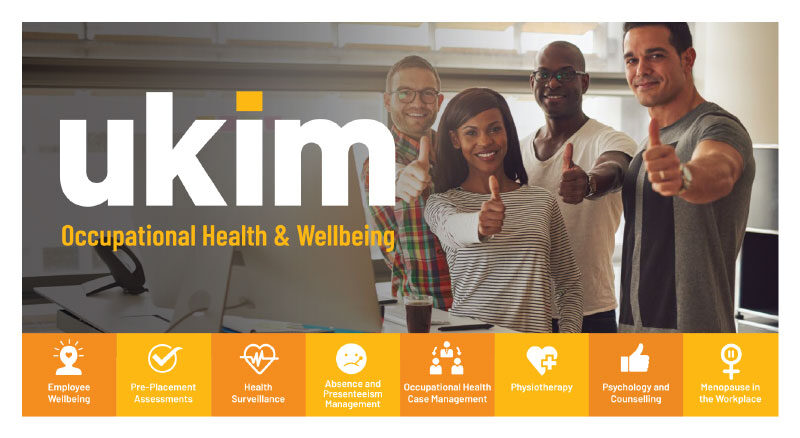
Your handy guide to the Occupational Health services we can supply and support your business with - click the image below for your PDF copy;
Are you an employee?
If you have any health conditions or concerns that you are worried may impact your performance at work, we would encourage you to discuss them with your employer in a transparent and open manner. They may be able to provide support or a referral to our Occupational Health services (like Physiotherapy or Counselling) to help you manage your health at work.
You can also get more information by reading through our Occupational Health Assessment FAQ for Employees ››
Our commitment to you...
At UKIM, we are committed to promoting the health and wellbeing of employees in the workplace, and our focus on Absenteeism and Presenteeism Management is a critical aspect of this mission. Our team is equipped with the knowledge and expertise needed to provide independent and unbiased medical advice, ensuring that employees receive the support they need to get back to work and perform at their best.
Our Clinical Experts discuss ways to manage and prevent employee absenteeism.
The UKIM team of professionals have written extensively about Employee Absenteeism and Presenteeism, providing additional insight into the ways our Occupational Health services can offer support to businesses.

The rise of 'Quiet Quitting' and presenteeism in workforces
Quiet Quitting seems to be the new rising problem within workforces; it’s when staff are really disengaging from their jobs or work and not putting in much effort...

READ MORE
Presenteeism - A Costly Problem
Recent data shows that 59% of employees don’t take time off when they’re sick, despite needing to. This means that they’re heading into the workplace unwell...

READ MORE
Navigating Absenteeism and the Vital Role of Occupational Health within the Workplace
Employees' unplanned absences, whether due to illness, stress, or other reasons, can disrupt business operations, hinder team dynamics, and impact your bottom line...
READ MORE
Learn more about our range of Occupational Health services for businesses...
Our team of experts adopt a holistic, end-to-end approach to tackling the physical and mental health challenges your workforce may encounter and treat them through a range of effective occupational health solutions, including:

Health Surveillance
Health Surveillance plays an important part in helping you ensure the health of your employees is not adversely affected by their working...

READ MORE...
Employee Wellbeing
Our expert team has designed bespoke Employee Wellbeing strategies to help companies like yours build a thriving and productive workforce...
READ MORE...

Physiotherapy
Investing in physiotherapy services is an investment in the long-term health and wellbeing of your employees, and the success of your business...
READ MORE...

Ready to speak with our expert team?
To find out more about our Employee Absence and Presenteeism Management services and how we can help your business, call 0333 049 2872 or email: wellbeing@ukim-oh.com


.png?width=151&height=73&name=dc_badge3%20(5).png)